
Audience Engagement: Plan Different Ways to Take Part
“Get everyone involved” sounds good until it means putting a reluctant guest on the spot. A better plan gives people a clear invitation and more than one comfortable way to enjoy the event.
Define what participation means for your event
Start with the moment you want to create. Do you want guests to gather for a show, meet someone while mingling, make a keepsake or work together through a game?
Choose one clear purpose for each activity. A shared programme does not need everyone to participate in the same way. Discuss how people can join, watch or step away, and tell the provider about the audience and setting.
Choose the kind of invitation
Watch together
A scheduled act gives guests a shared focus. Plan the introduction, sightlines and timing so people know when the performance begins and can choose where to watch.
Join a small interaction
A roving performer or a drawing and photo activity lets guests take part in smaller groups. Consider how people approach the activity, where they wait and how they rejoin the event.
Play as a group
A hosted game gives the room a common structure. TriXtan’s Game Shows collection includes team and quiz-style formats. Discuss the rules, audience role and participation approach for the particular show.
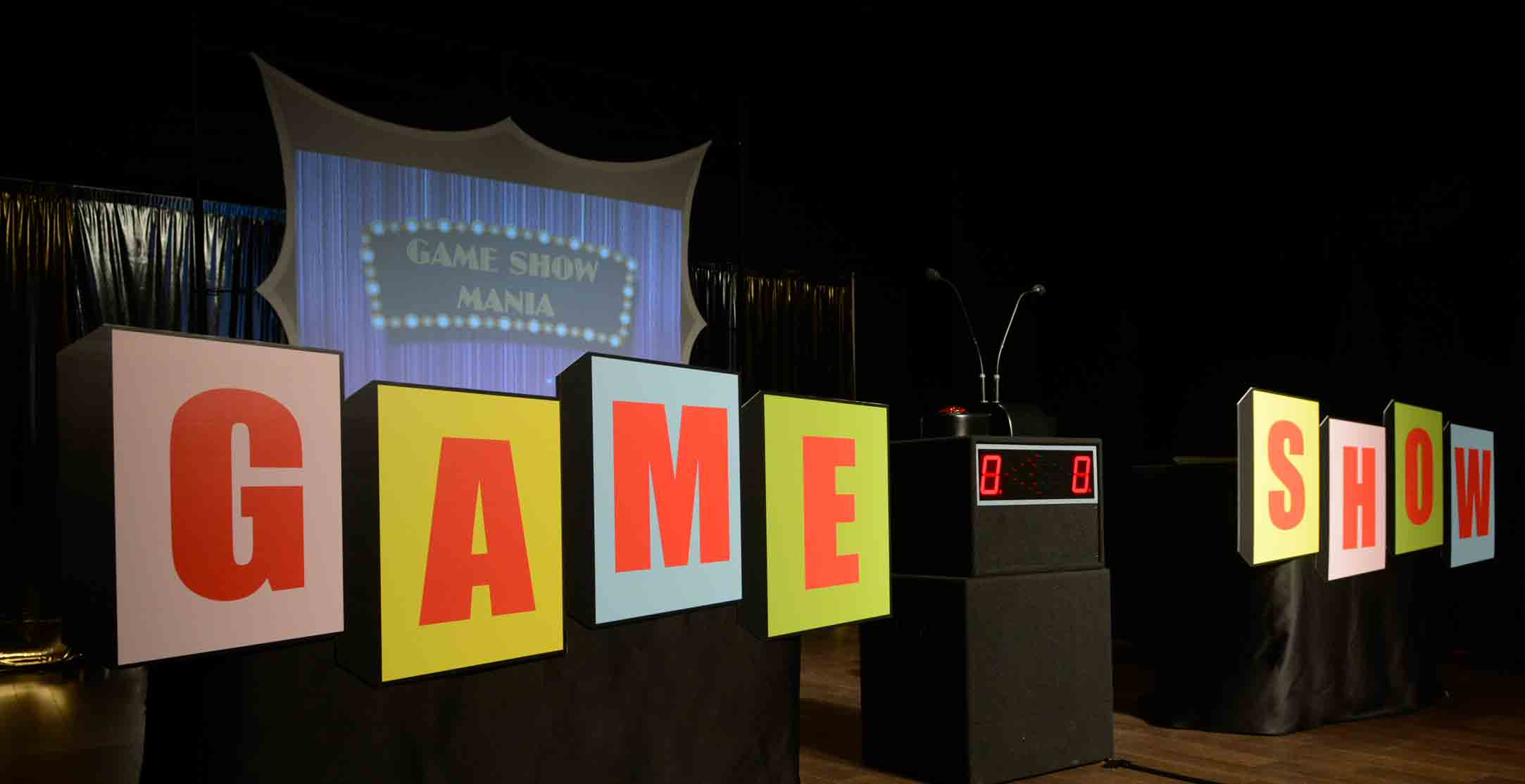
An existing Game Show setup shows a clear focal point and team stations. Confirm the format and layout for your event.
Make the next step obvious
Guests should be able to understand where to go, what the activity involves and how to join. Use a short introduction, simple instructions or a clear host welcome rather than expecting people to work it out.
For a group game, explain how teams form and how a round works. For a drop-in activity, put the instructions and materials together. Let the provider know if the group needs a particular communication approach.
Give the activity a useful place in the programme
Consider what guests have just been doing and what comes next. A lively group activity, a meal and a speech ask for different kinds of attention. Allow the host and suppliers a clear handover between them.
Keep queues and activity areas connected to the event without blocking the main routes. Identify who will welcome guests, answer questions and coordinate changes with the provider.
Review the experience with practical observations
Afterwards, note which activities people joined, where they watched and whether instructions or queues caused confusion. Ask the host and suppliers what they noticed. Those observations help make the next event brief more specific.
For a related planning approach, read the themed-event guide to connect the activity with the look and programme.
Plan the invitation your guests will receive
Share the audience, date, venue and kind of participation you want. We can discuss current entertainment formats and the interaction for your event.